
I had one of those reminders recently that the tools may evolve, but human behaviour doesn’t move nearly as fast.
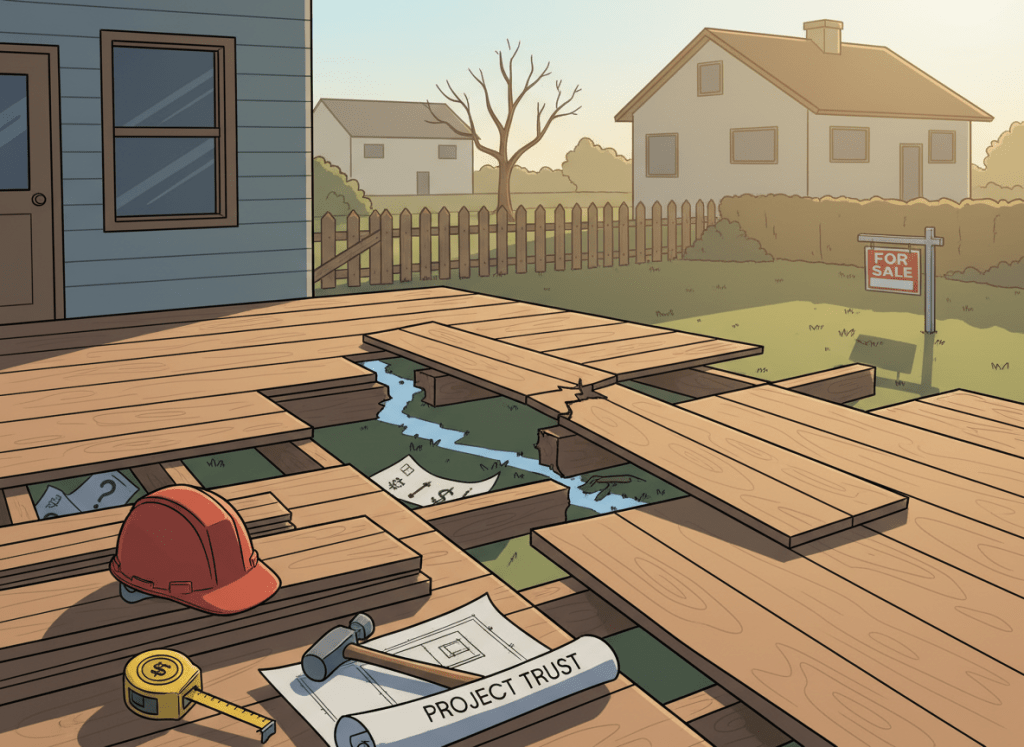
At home, I’ve had a long, drawn-out decking job going on. Nothing unusual there. Delays, moving parts, too many conversations, and the usual feeling that something simple somehow became more complicated than it needed to be.
But then came the part that really caught my attention.
The subcontractor started trying to work around the main contractor and get me to pay him directly.
Now, maybe there are details and frustrations on all sides. There usually are. But it was one of those moments that makes you stop and think: for all the systems, processes, contracts, technology and supposed sophistication we build around work, people still tend to revert to the same thing when pressure hits — looking after themselves first.
And honestly, recruitment is no different.
We’ve got better tech than ever. Better databases. Better search. Better automation. Better AI. Better visibility across markets, candidates, clients and competitors. In theory, all of that should make things cleaner, faster and more transparent.
In some ways, it does.
But the core challenge hasn’t changed.
People still test boundaries. People still look for shortcuts. People still justify behaviour based on what suits them in the moment. And ethics, more often than not, becomes a flexible concept depending on where someone is standing.
That’s true in building. It’s true in business. And it’s definitely true in recruitment.
Clients, candidates, suppliers, recruiters, contractors; everyone usually has a version of the story that makes their actions feel reasonable. Sometimes it is reasonable. Sometimes it’s just self-interest dressed up as logic.
That doesn’t mean everyone is bad. Far from it.
It just means that trust still matters more than process, and character still matters more than the tools.
You can have the best systems in the world, but if people are willing to step around agreements, blur lines, or play angles when it suits them, then the real challenge isn’t operational.
It’s human.
That’s probably why, despite all the change in recruitment over the years, the fundamentals still look familiar. The platforms are better. The speed is faster. The information is richer. But judgment, relationships, transparency and trust still do most of the heavy lifting.
Because when things get murky, and they always do at some point, that’s what gets tested.
Not the software.
The people.
And maybe that’s the real lesson.
For all the noise around innovation, automation and transformation, most industries are still dealing with the same old problem:
The tech has changed. People haven’t.
 The Talent Initiative
Leave a comment